TL;DR: Haruspex AI indicates significant bearish market pressure on the Energy sector, with its average score falling 12.3 points below the broader market average. While crude oil prices remain subdued, a nuanced view of individual stocks like XOM and ET reveals underlying divergences. Investors should monitor WTI crude oil prices and sector-specific signals for potential shifts.
On Thursday, July 2, 2026, ET, the broader market experienced modest directional shifts, with the S&P 500 closing down 0.22% at 7,483.23 [data: 2026-07-02 close]. The VIX remained relatively calm at 16.04, signaling moderate volatility. However, Haruspex AI detected a pronounced undercurrent of bearish pressure within the Energy sector, contrasting with generally bullish signals across most other market segments.
Macro Market Snapshot: July 2, 2026
| Metric | Current | Key Level |
|---|---|---|
| S&P 500 | 7,483.23 (-0.22%) [data: 2026-07-02 close] |
7,500 (Resistance) |
| VIX | 16.04 [data: 2026-07-02 close] | 15.00 (Low Volatility) |
| 10Y Treasury Yield | 4.47% [data: 2026-07-02 close] | 4.50% (Key Resistance) |
| WTI Crude Oil | $67.58 [data: 2026-07-02 close] | $70.00 (Support/Resistance) |
| US Dollar Index (DXY) | 100.72 [data: 2026-07-02 close] | 101.00 (Resistance) |
Extended Market Data
| Metric | Current | Change |
|---|---|---|
| Gold | $4,130.20 [data: 2026-07-02 close] | +1.17% |
| Natural Gas | $3.16 [data: 2026-07-02 close] | -1.77% |
| NASDAQ | 26,040.03 [data: 2026-07-02 close] | -0.66% |
| Russell 2000 | 3,012.59 [data: 2026-07-02 close] | -0.39% |
Sector Performance Overview
While the overall market demonstrated a mixed close, most sectors exhibited bullish pressure. Technology, Healthcare, Utilities, and Industrials led with high average scores and a significant majority of bullish-signaled stocks. This indicates a robust underlying demand across growth and stable defensive segments.
| Sector | Stocks Analyzed | Average Score | Bullish Signals |
|---|---|---|---|
| Materials | 7 | 57.1 | 3 |
| Financial Services | 19 | 63.2 | 13 |
| Technology | 43 | 64.2 | 32 |
| Healthcare | 17 | 66.4 | 14 |
| Real Estate | 8 | 58.3 | 4 |
| Consumer Cyclical | 34 | 56.3 | 20 |
| Consumer Defensive | 20 | 57.5 | 13 |
| Utilities | 8 | 67.0 | 8 |
| Industrials | 14 | 68.2 | 12 |
| Communication Services | 15 | 53.8 | 6 |
| Energy | 7 | 48.4 | 2 |
Energy Under Pressure: A Deeper Dive
The Energy sector stands out with an average score of 48.4, significantly below the market average of 60.7, marking a -12.3 point underperformance. This divergence signals a strengthening bearish pressure on the sector as a whole, driven by various market forces and underlying AI-detected dynamics. Only two of the seven analyzed energy stocks registered bullish pressure.
Why is the Energy Sector Underperforming?
The primary driver for the Energy sector's current bearish pressure appears to be softening commodity prices, specifically WTI Crude Oil. Trading at $67.58 [data: 2026-07-02 close], WTI has struggled to regain bullish momentum, reflecting concerns about global demand or ample supply. This macro headwind creates a challenging environment for energy producers and service providers.
Haruspex AI also identified specific signals for individual stocks, revealing nuances within the broader sector trend. While the general sentiment for energy is subdued, some companies demonstrate unique market pressure dynamics, differentiating them from their peers. This granular view helps uncover hidden resilience or vulnerability.
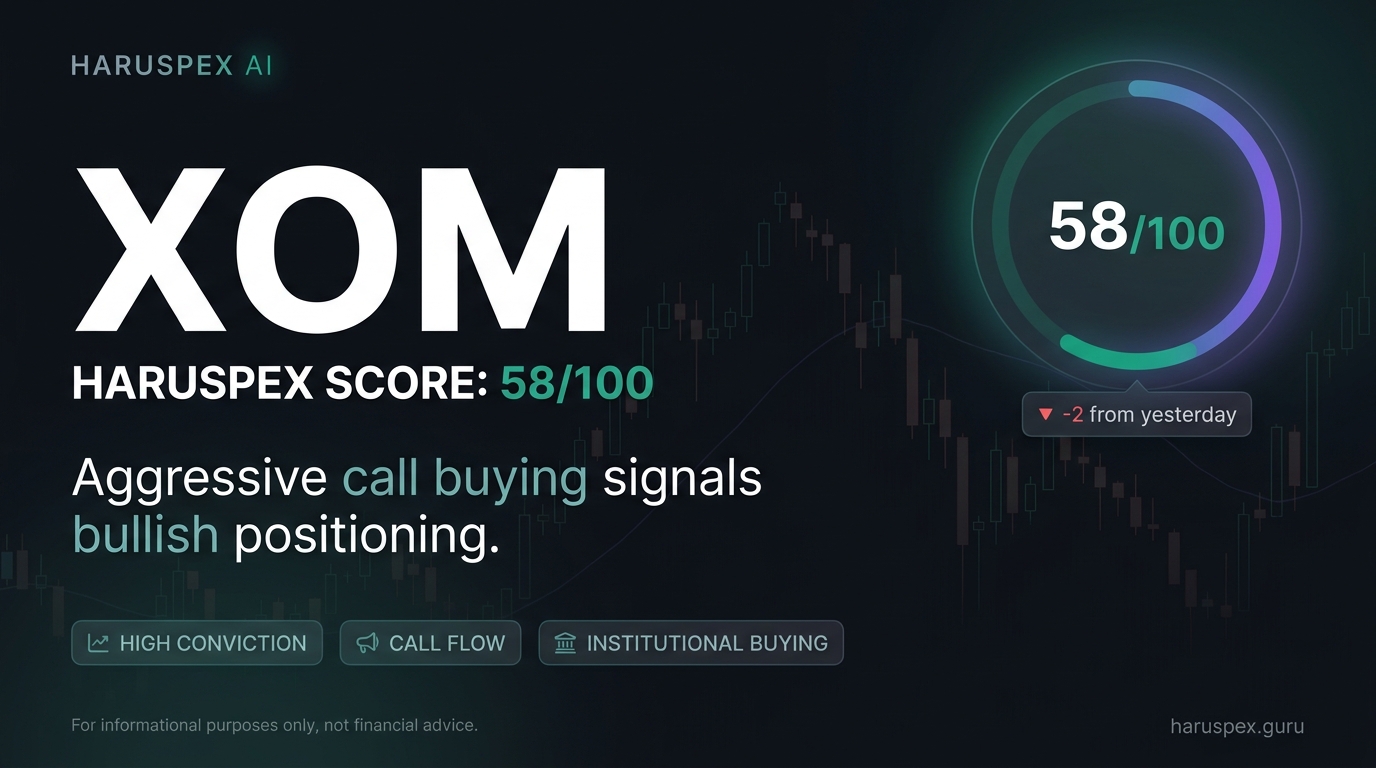
- Exxon Mobil Corporation (XOM): With a score of 66.0, XOM exhibits bullish market pressure, maintaining its position from the previous period. Haruspex's AI detected a buyer-seller imbalance favoring bulls, indicating sustained demand for the stock despite broader sector headwinds. This suggests a potential flight to quality within the energy space.
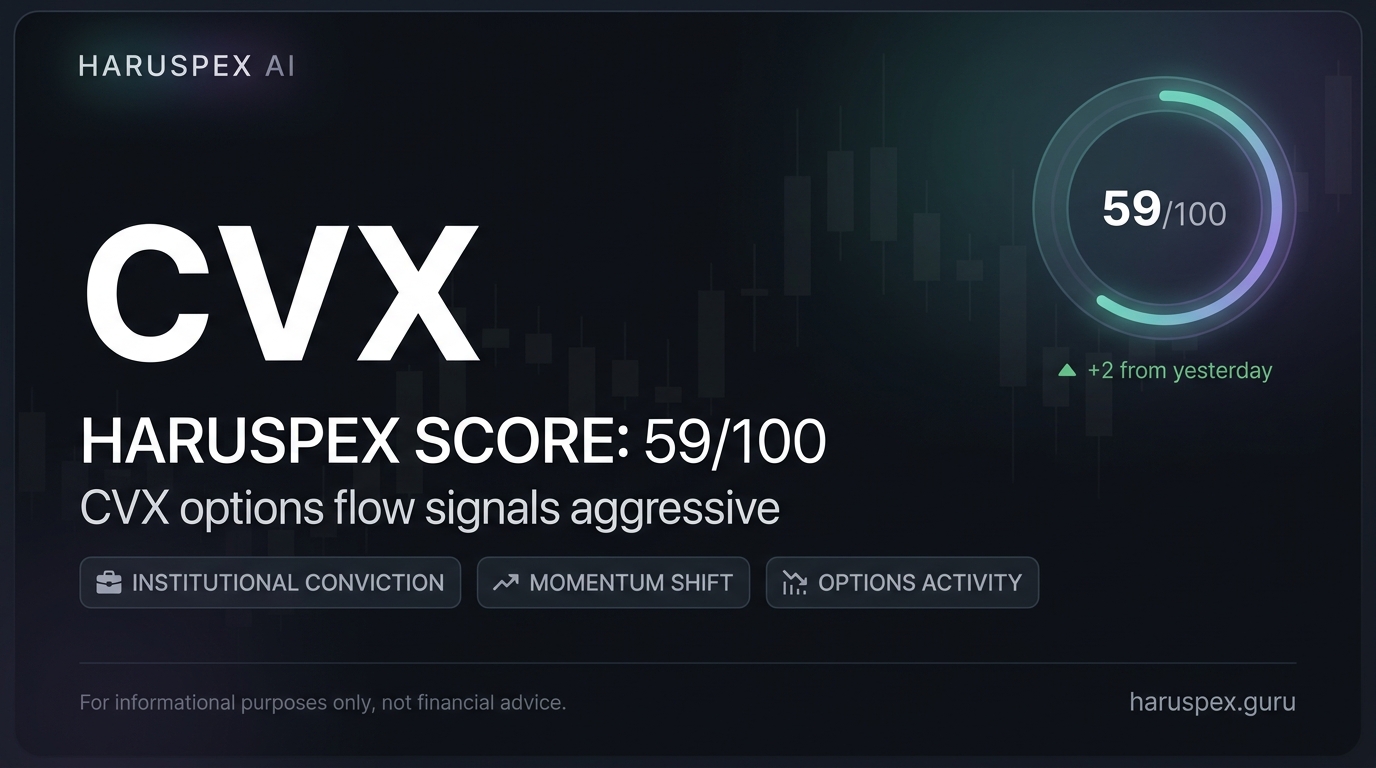
- Chevron Corporation (CVX): Registering a score of 58.0, CVX shows lingering bullish market pressure, despite a slight decline of -1.0 point. Haruspex's AI observed positive market pressure signals, implying that while some momentum may be waning, the directional edge still leans positive. It indicates resilience relative to the sector's general weakness.
- Energy Transfer LP (ET): Holding a neutral score of 51.0, ET surprisingly saw a +5.0 point increase in market pressure. Haruspex AI observed its directional edge strengthening relative to its peers. This suggests that while still in neutral territory, ET is showing comparative improvement against the backdrop of a struggling sector, possibly due to unique operational or financial factors.
- Halliburton Company (HAL): At a score of 42.0, HAL is under bearish market pressure, experiencing a significant -12.0 point decline. Haruspex's AI detected strong buyer accumulation in its underlying metrics. However, this accumulation appears insufficient to overcome the broader bearish signals, suggesting buyers are possibly absorbing selling pressure without reversing the overall trend, or selling into any strength.
- Devon Energy Corporation (DVN): With a score of 41.0, DVN also faces bearish market pressure, falling by -9.0 points. Similar to ET, Haruspex AI detected its directional edge strengthening compared to its peers. Despite this relative improvement, DVN remains firmly in bearish territory, highlighting the pervasive negative sentiment impacting upstream producers.
Cross-Theme Connections
The weakness in the Energy sector is directly correlated with the price action of WTI Crude Oil. A sustained low price environment for crude oil puts pressure on the profitability and future outlook for energy companies, directly impacting their market performance. The current VIX level at 16.04 suggests that this sector-specific pressure is not translating into broader market panic.
The divergence seen in the Energy sector compared to the bullish signals in Technology and Industrials highlights a rotational theme. Capital may be flowing out of commodity-sensitive sectors into areas perceived as having stronger growth prospects or more stable earnings. This rotation is a key dynamic to monitor in the coming weeks.
Theme Summary
| Theme | Category | Strength | Key Signal | Top Stock (by score) |
|---|---|---|---|---|
| Energy Under Pressure | Sector Momentum | 75/100 (Strong) | Energy avg score 48.4 vs market avg 60.7 (-12.3) | XOM (Score 66.0) |
Regime Thresholds
- Energy Sector Bearish Pressure: The current bearish pressure on the Energy sector is likely to persist as long as WTI Crude Oil remains below $70.00. A sustained break above this level could signal a reduction in bearish sentiment.
- Broader Market Resilience: The market's overall bullish lean, particularly in growth and defensive sectors, is expected to continue unless the S&P 500 closes below 7,300 for two consecutive days on above-average volume.
What Would Change This View
- If WTI Crude Oil closes above $72.00 per barrel for three consecutive trading days, it would challenge the current bearish pressure thesis on the Energy sector, potentially moving HAL and DVN out of bearish territory.
- A significant macroeconomic data release indicating unexpectedly strong global growth could ignite demand-side optimism for energy, shifting the overall sector's average score above 55.0.
- Should XOM's market pressure score fall below 60.0, it would signal that even the most resilient energy majors are succumbing to sector-wide headwinds, validating a stronger bearish outlook.
Outlook
The Haruspex AI analysis points to a distinct bifurcation in market dynamics. While the broader market, led by Technology and Healthcare, maintains a bullish posture, the Energy sector faces persistent headwinds. Investors should pay close attention to WTI Crude Oil prices, as their trajectory will largely dictate the immediate future of energy stocks.
The ability of Haruspex's AI to detect nuanced signals like buyer-seller imbalances for XOM or strengthening directional edges for ET and DVN, even within a broadly bearish sector, provides critical insights missed by conventional, aggregated analysis. These granular signals offer opportunities for selective positioning or risk management within a challenging environment.