TL;DR: ESG factors are heavily influencing market direction, with low scores weighing on stock movement. Rising oil prices at $96.81 are amplifying energy sector focus. Investors should monitor WTI crude and ESG developments, with XOM and NVDA showing notable reactions to these pressures.
Friday's trading session is dominated by two key themes identified by Haruspex AI: ESG & Sustainability concerns, and the impact of elevated Energy & Commodity prices, particularly oil. Volatility also plays a supporting role.
ESG & Sustainability Pressures
The dominant theme today is the broad market response to ESG (Environmental, Social, and Governance) factors. Haruspex AI detects this theme at a strength of 100/100, indicating an extreme level of influence on stock movements. The dimension signal shows an average ESG score of 0, with 0% of stocks scoring above 70 on this dimension. This suggests that companies with poor ESG profiles are facing significant headwinds.
The data indicates a market-wide repricing driven by ESG considerations. Stocks are experiencing amplified price swings (±50.0 avg movement) as investors react to their ESG standing. This dynamic presents both opportunities and risks. Stocks with low ESG scores may face continued selling pressure, while those demonstrating improvement or strong ESG practices could see increased investor interest. Haruspex analysis suggests that current ESG scoring models are inadequate and undervalue companies making genuine ESG efforts.
Affected Stocks:
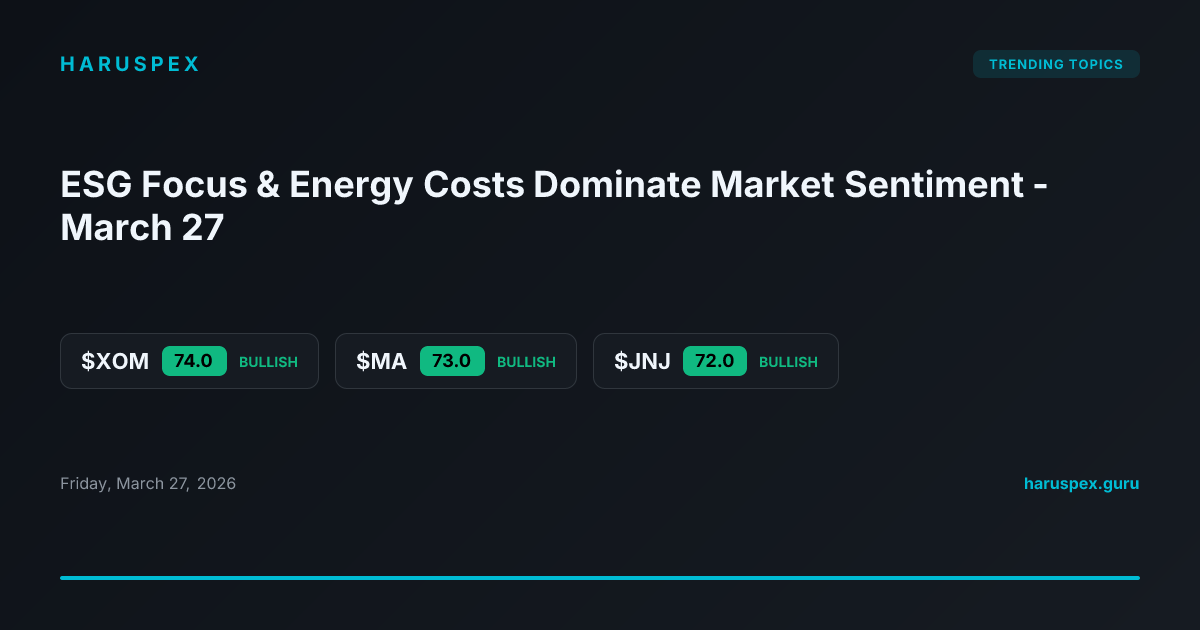
- XOM (Exxon Mobil Corporation): Score 74.0, Change +7.0. Outlook: bullish. ESG: 0. Buyer-seller imbalance favoring bulls. This outlier shows that even in the face of ESG pressure, strong commodity prices can drive positive momentum, but is likely to face increased scrutiny.
- MA (Mastercard Inc.): Score 73.0, Change 0.0. Outlook: bullish. ESG: 0. Strong buyer accumulation detected despite ESG headwinds.
- JNJ (Johnson & Johnson): Score 72.0, Change -5.0. Outlook: bullish. ESG: 0. Buyer-seller imbalance favoring bulls. Resilience suggests underlying strength but is not immune to ESG narrative.
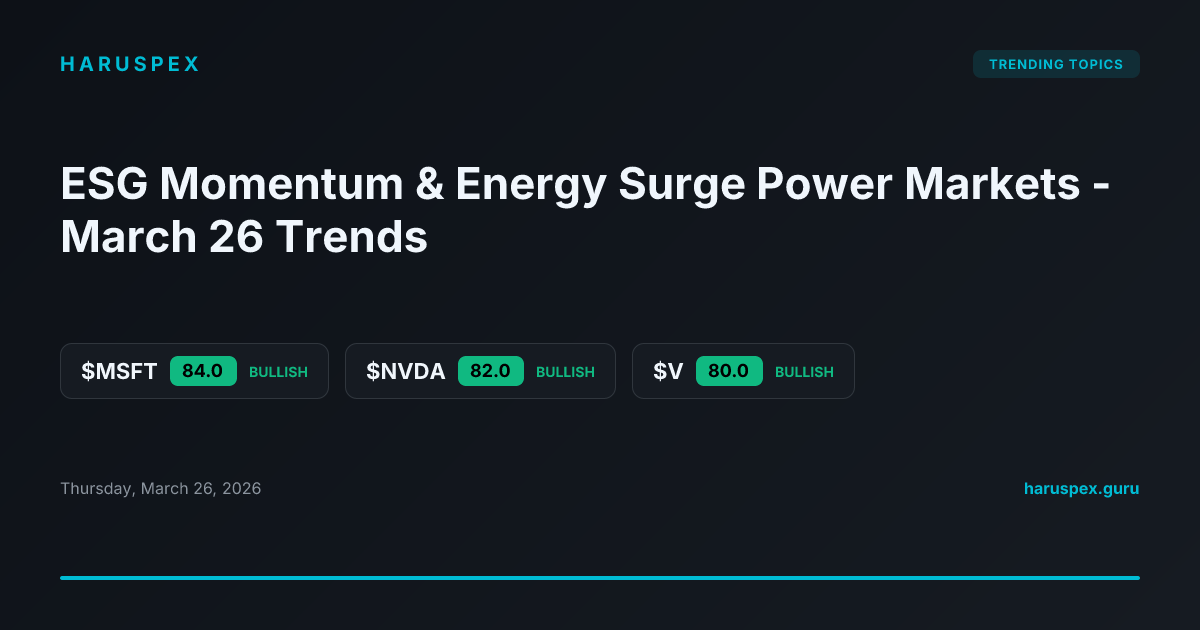
- NVDA (NVIDIA Corporation): Score 72.0, Change -10.0. Outlook: bullish. ESG: 0. Positive market pressure signals indicate buying opportunity, but negative movement highlights susceptibility.
- AMZN (Amazon.com Inc.): Score 71.0, Change -2.0. Outlook: bullish. ESG: 0. Bullish directional pressure building despite the broader ESG impact.
Energy & Commodities Impact
The second major theme is the influence of energy and commodity prices, with a strength of 85/100. WTI Crude Oil is currently trading at $96.81, exceeding the $85 threshold identified by Haruspex AI as a key level influencing market sentiment. High energy prices disproportionately affect sectors reliant on transportation and manufacturing. This factor also contributes to inflation concerns and could pressure the Federal Reserve to maintain a hawkish monetary policy stance.
Affected Stocks:
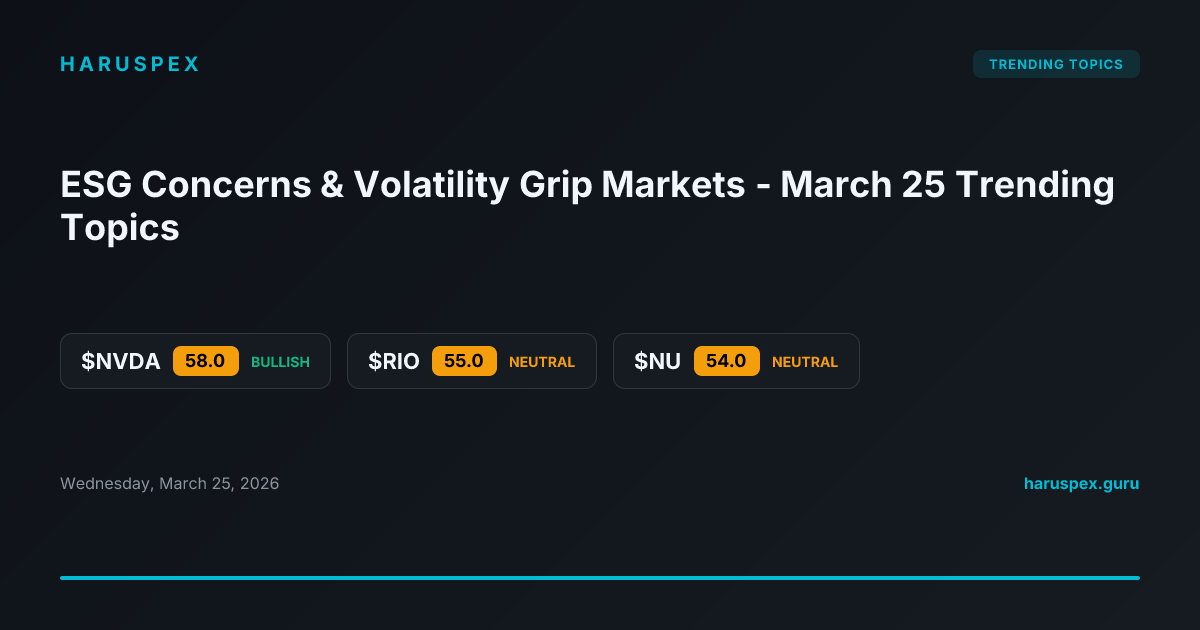
- NVDA (NVIDIA Corporation): Score 58.0, Change -23.0. Outlook: bullish. Directional edge strengthening vs. peers despite headwinds.
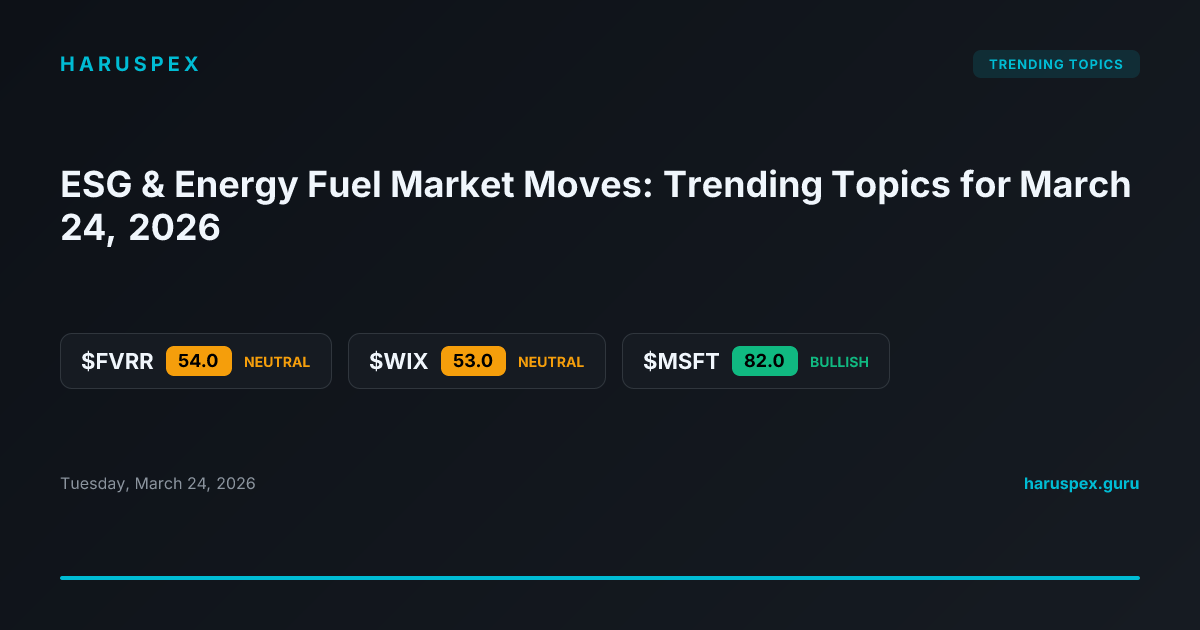
- MSFT (Microsoft Corporation): Score 62.0, Change -22.0. Outlook: bullish. Positive market pressure signals.
- LLY (Eli Lilly and Company): Score 51.0, Change -22.0. Outlook: neutral. Upward momentum forces detected.
Volatility & Market Fear
Haruspex AI identifies volatility and market fear as a contributing factor, with a strength of 70/100. The VIX (CBOE Volatility Index) is currently at 29.74, indicating elevated levels of uncertainty and risk aversion. High volatility can exacerbate market swings and create short-term trading opportunities. Investors should be prepared for potential price fluctuations and consider strategies to manage risk, such as hedging or diversification.
Affected Stocks:
- NVDA (NVIDIA Corporation): Score 58.0, Change -23.0. Outlook: bullish. Buyer-seller imbalance favoring bulls.
- MSFT (Microsoft Corporation): Score 62.0, Change -22.0. Outlook: bullish. Directional edge strengthening vs. peers.
- LLY (Eli Lilly and Company): Score 51.0, Change -22.0. Outlook: neutral. Directional edge strengthening vs. peers.
Cross-Theme Connections
These three themes are interconnected. High energy prices contribute to inflation, potentially prompting further monetary tightening by the Federal Reserve. This, in turn, could increase volatility and negatively impact risk appetite. Furthermore, ESG concerns can exacerbate the impact of high energy prices by limiting investment in traditional energy sources, thus reducing supply.
Market Theme Summary
| Theme | Category | Strength | Key Signal | Top Stock |
|---|---|---|---|---|
| ESG & Sustainability | Macro | 100/100 | Avg ESG score 0 | XOM |
| Energy & Commodities | Commodity | 85/100 | Oil at $96.81 | NVDA |
| Volatility & Market Fear | Macro | 70/100 | VIX at 29.74 | NVDA |
Regime Thresholds
- ESG & Sustainability: If the average ESG score across the S&P 500 rises above 30, the negative pressure from this theme will likely decrease.
- Energy & Commodities: A sustained drop in WTI Crude Oil below $85 would alleviate pressure on energy-intensive sectors.
- Volatility & Market Fear: A decline in the VIX below 20 would signal a reduction in market fear and potentially lead to a broader risk-on sentiment.
What Would Change This View
- ESG & Sustainability: A significant shift in regulatory policy to weaken ESG mandates or substantial positive ESG performance from major corporations.
- Energy & Commodities: A coordinated release of strategic petroleum reserves by major oil-consuming nations, or a significant increase in oil production from OPEC.
- Volatility & Market Fear: A surprise dovish turn from the Federal Reserve, or a breakthrough in a major geopolitical conflict.
Outlook
The current market environment is complex, shaped by powerful and interacting forces. ESG concerns, amplified by high energy prices and elevated volatility, create a challenging backdrop for investors. Haruspex AI suggests a cautious approach, focusing on companies demonstrating resilience in the face of these pressures. While opportunities exist, active risk management is crucial to navigate this uncertain market landscape. Monitor the key levels highlighted in the Regime Thresholds section to adjust your strategy as conditions evolve.