TL;DR: ESG concerns and rising energy prices are currently dominating market sentiment. While ESG-sensitive stocks show little directional edge (average score 0), energy stocks are experiencing bullish pressure with an average Haruspex score of 70. Investors should closely monitor WTI crude oil prices above $112 and shifts in ESG investment flows.
| Metric | Current | Key Level |
|---|---|---|
| S&P 500 | 6575.32 | - |
| VIX | 27.57 | 20 (Risk-On Threshold) |
| 10Y Treasury Yield | 4.35% | 4.50% (Inflation Watch) |
| WTI Crude Oil | $112.38 | $85 (Critical Support) |
| US Dollar Index (DXY) | 100.10 | 101 (Resistance) |
| Gold | $4646.00 | $4700 (Resistance) |
ESG & Sustainability Pressures
Haruspex AI identifies ESG and sustainability as the most dominant market theme today, with a strength score of 100/100. However, the average ESG dimension score across stocks is near 0, indicating a lack of clear directional bias from ESG factors alone. This apparent contradiction suggests that while ESG is a major concern, its market impact is complex and nuanced. The average stock movement is ±50.0, reflecting the volatility surrounding ESG-related news and investor sentiment. The AI analysis detects only 0% of stocks above a score of 70, revealing the nascent stage of investors incorporating ESG factors into their models.
Several large-cap companies are exhibiting interesting dynamics in this environment:
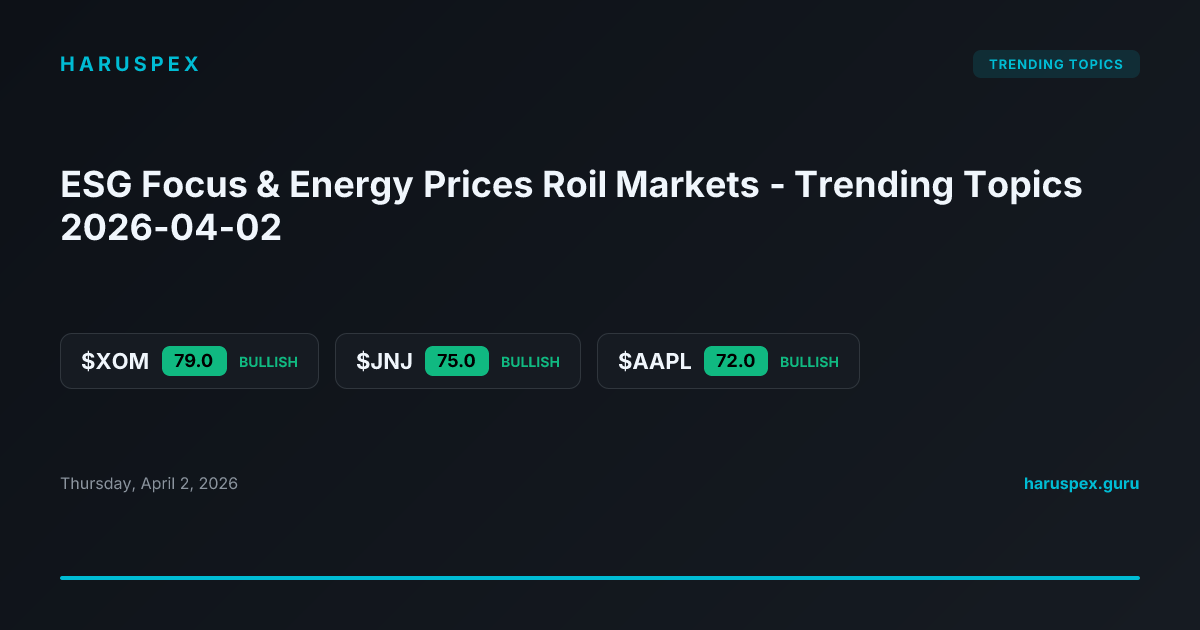
- XOM (Exxon Mobil Corporation): Score 79.0, Change +4.0. Outlook: bullish. ESG: 0. Haruspex analysis shows the directional edge of Exxon is strengthening compared to its peers, despite its ESG score of 0. This suggests a disconnect between ESG ratings and short-term market sentiment, possibly due to the current energy environment.
- JNJ (Johnson & Johnson): Score 75.0, Change +2.0. Outlook: bullish. ESG: 0. Strong buyer accumulation is detected by the AI, pointing towards positive momentum, regardless of ESG standing.
- AAPL (Apple Inc.): Score 72.0, Change 0.0. Outlook: bullish. ESG: 0. The stock registers positive market pressure signals, likely driven by factors other than immediate ESG considerations.
- AMZN (Amazon.com Inc.): Score 71.0, Change -1.0. Outlook: bullish. ESG: 0. Haruspex detects its directional edge strengthening relative to sector peers, implying potential outperformance despite its current ESG score.
- MA (Mastercard Inc.): Score 71.0, Change 0.0. Outlook: bullish. ESG: 0. The stock is demonstrating strong buyer accumulation, indicating underlying investor confidence.
Haruspex AI detects that while companies may have low ESG scores, external factors might be influencing them more strongly, creating short-term bullish signals.
Energy & Commodities Surge
The Energy & Commodities theme is the second strongest, with a score of 85/100. The key driver is the elevated WTI crude oil price at $112.38, significantly above the $85 threshold. High oil prices typically benefit energy companies but also create inflationary pressures and can negatively impact consumer discretionary spending.
Affected stocks:
- MA (Mastercard Inc.): Score 67.0, Change +6.0. Outlook: bullish. Bullish directional pressure is building, potentially linked to increased consumer spending due to inflationary effects.
- JPM (JPMorgan Chase & Co.): Score 67.0, Change -5.0. Outlook: bullish. Upward momentum forces are detected, though the negative price change indicates some investor caution.
- LLY (Eli Lilly and Company): Score 67.0, Change +5.0. Outlook: bullish. Strong buyer accumulation suggests resilience despite broader market concerns.
Volatility & Market Fear
The VIX, a measure of market volatility, is currently at 27.57, indicating elevated levels of market fear (strength score 70/100). High volatility often leads to increased trading activity and can create opportunities for both gains and losses.
The same stocks identified in the Energy & Commodities theme are also affected by the volatility theme:
- MA (Mastercard Inc.): Score 67.0, Change +6.0. Outlook: bullish. Strong buyer accumulation suggests investor confidence despite market uncertainty.
- JPM (JPMorgan Chase & Co.): Score 67.0, Change -5.0. Outlook: bullish. Institutional buying pressure is detected, potentially indicating a long-term investment perspective.
- LLY (Eli Lilly and Company): Score 67.0, Change +5.0. Outlook: bullish. Directional edge is strengthening compared to peers, signifying relative outperformance during volatile times.
Gold & Safe Haven Decline
Despite market volatility, gold is down -3.5% to $4646.00 (theme strength 69.4/100). This decline suggests that investors are not flocking to traditional safe-haven assets, possibly due to the attractive returns in other sectors like energy.
The same stocks identified in the Energy & Commodities theme are also affected by the safe-haven decline:
- MA (Mastercard Inc.): Score 67.0, Change +6.0. Outlook: bullish. Positive market pressure signals despite gold's decline suggest resilience.
- JPM (JPMorgan Chase & Co.): Score 67.0, Change -5.0. Outlook: bullish. Directional edge is strengthening compared to peers despite gold's decline.
- LLY (Eli Lilly and Company): Score 67.0, Change +5.0. Outlook: bullish. Institutional buying pressure suggests confidence despite gold's weakness.
Cross-Theme Connections
The identified themes are interconnected. Rising energy prices directly impact inflation expectations, potentially benefiting financial services companies like Mastercard and JPMorgan Chase. The elevated VIX reflects broader market uncertainty, influencing investor behavior across sectors. The decline in gold prices may indicate a risk-on sentiment, further supporting the bullish outlook for energy stocks.
| Theme | Category | Strength | Key Signal | Top Stock |
|---|---|---|---|---|
| ESG & Sustainability | Macro | 100/100 | ESG dimension average score 0 | XOM |
| Energy & Commodities | Commodity | 85/100 | Oil at $112.38 | MA |
| Volatility & Market Fear | Macro | 70/100 | VIX at 27.57 | MA |
| Gold & Safe Haven | Commodity | 69.4/100 | Gold down -3.5% | MA |
Regime Thresholds
- ESG & Sustainability: If significant ESG funds begin divesting from stocks with low ESG scores, pressure on these stocks will intensify.
- Energy & Commodities: If WTI crude oil surpasses $120, inflationary pressures are likely to worsen, further benefiting energy companies but potentially hurting consumer discretionary sectors. If oil drops below $100, the bullish energy thesis weakens.
- Volatility & Market Fear: If the VIX falls below 20, a risk-on environment may emerge, reducing the appeal of safe-haven assets and potentially favoring growth stocks. If VIX exceeds 35, the environment becomes extremely risk-off.
- Gold & Safe Haven: If gold rises above $4700, investor concerns about economic stability are likely increasing, potentially signaling a shift towards safer assets.
What Would Change This View
- ESG & Sustainability: If XOM's Haruspex score drops below 60, the bullish directional edge would be negated. If new regulations increase the cost of doing business for companies with low ESG scores, the current dynamic could shift.
- Energy & Commodities: A significant increase in oil production from OPEC+ nations could drive down prices, invalidating the bullish thesis. If global economic growth slows significantly, demand for oil could decrease, putting downward pressure on prices.
- Volatility & Market Fear: If the Federal Reserve signals a more dovish stance, it could reduce market uncertainty and lower the VIX. A successful resolution to geopolitical tensions could also decrease market volatility.
- Gold & Safe Haven: Unexpected positive economic data could decrease demand for gold as investors seek higher-yielding assets. If central banks begin selling off their gold reserves, it could put downward pressure on prices.
Outlook
The current market is being shaped by competing forces. ESG pressures and soaring energy prices present both opportunities and challenges. While ESG considerations are growing, they aren't currently dictating market movements as strongly as energy costs. Investors should closely monitor WTI crude oil prices and the VIX for clues about future market direction. Financial services and healthcare sectors appear relatively resilient in this environment. The apparent disconnect between ESG scores and equity market performance provides an interesting, AI-driven view that may generate alpha in the short term.


