TL;DR: The Materials sector exhibits significant bullish market pressure, with an average Haruspex AI score of 72.6, driven by robust commodity prices and institutional buying. Investors should monitor top performers like NUE, NEM, and FCX as directional signals intensify.
Materials Sector Poised for Continued Growth Amid Bullish Pressure
The Materials sector is currently displaying compelling bullish directional signals, according to Haruspex AI's multi-dimensional analysis. With an impressive average AI score of 72.6 across its 8 constituents, the sector is firmly positioned in the 'strong bullish pressure' territory. A striking 6 out of 8 stocks are registering bullish signals, with zero exhibiting bearish pressure, underscoring a broad-based positive sentiment.
Haruspex analysis indicates this robust directional pressure is a response to several interconnected macro factors and specific market dynamics that conventional analysis might underappreciate. The current environment, marked by a resilient S&P 500 and elevated commodity prices, appears to be fueling investor confidence in raw material and chemical producers.
Macro Environment Snapshot
The broader economic landscape provides a constructive backdrop for the Materials sector:
| Metric | Current | Key Level |
|---|---|---|
| S&P 500 | 7494.11 (+0.67%) | 7400 (Support) |
| VIX | 17.95 | 20.00 (Volatility Threshold) |
| 10Y Treasury Yield | 4.45% | 4.50% (Resistance) |
| WTI Crude Oil | $100.88 | $100.00 (Psychological Support) |
| US Dollar Index (DXY) | 98.61 | 98.00 (Support) |
Leading the Charge: Top Performers
Several companies within the Materials sector are exhibiting particularly strong directional market pressure, driving the overall sector's bullish trend:
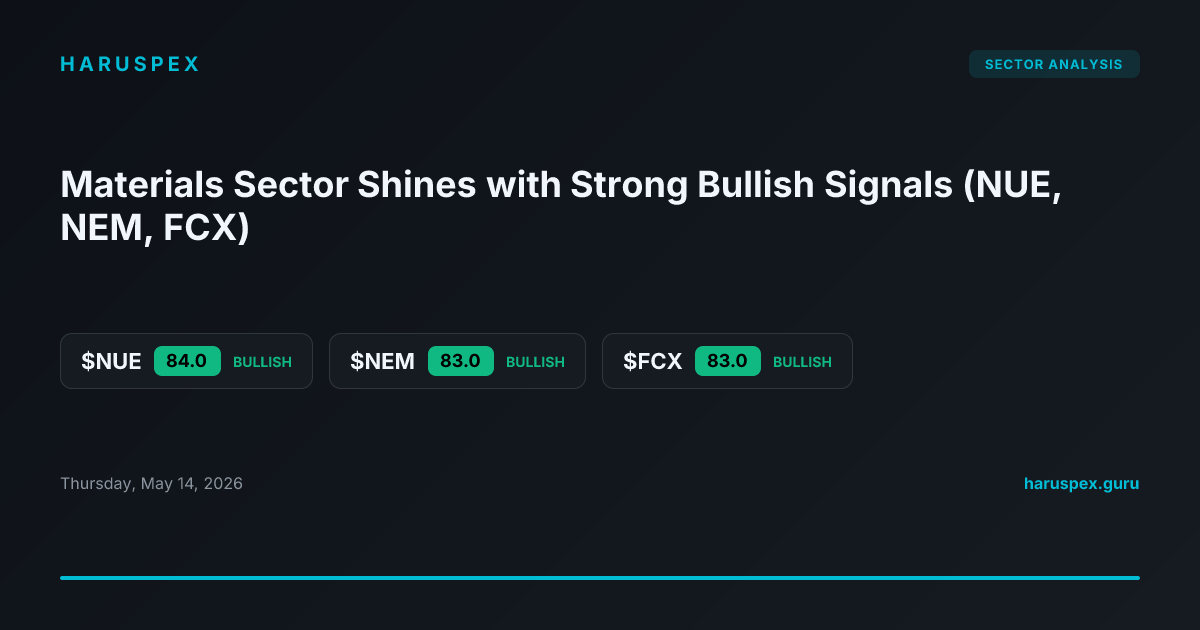
- Nucor Corporation (NUE): With a Haruspex AI score of 84.0, up 3.0 points, NUE is showing strong positive market pressure signals. Haruspex's analysis identifies subtle accumulation patterns and order flow dynamics that suggest sustained buyer interest, often preceding broader consensus recognition.
- Newmont Corporation (NEM): Holding an AI score of 83.0, NEM is registering significant institutional buying pressure. The AI detects large block trades and consistent accumulation by key players, suggesting conviction behind the current price action, which can be less apparent in standard volume metrics.
- Freeport-McMoRan Inc. (FCX): FCX also boasts an AI score of 83.0, a notable 7.0-point increase. Similar to NEM, institutional buying pressure is a dominant factor. The AI's multi-dimensional models pinpoint specific areas of liquidity absorption, indicating strong hands are entering or increasing positions.
- DuPont de Nemours Inc. (DD): Scoring 81.0, an increase of 1.0 point, DD shows bullish directional pressure building. This indicates a favorable shift in the buyer-seller dynamics, with buyers demonstrating increasing control over pricing, often reflecting improving sentiment around future earnings or sector specific tailwinds.
- Linde plc (LIN): LIN recorded the largest jump, up 12.0 points to a score of 77.0. This significant shift is attributed to pronounced institutional buying pressure, with the Haruspex AI flagging aggressive bidding and large-scale acquisitions by sophisticated market participants.
Sector Drivers
The current bullish pressure in the Materials sector is propelled by several key themes:
- Commodity Price Strength: WTI crude oil firmly above $100 and other industrial metal prices maintaining elevated levels are direct tailwinds for many materials producers. Haruspex analysis suggests that the sustained demand for these commodities, despite broader economic uncertainties, is a key confidence booster.
- Industrial Demand Resurgence: Despite a potential slowdown in some areas, targeted industrial demand, possibly driven by infrastructure initiatives or re-shoring efforts, is translating into robust order books for certain materials.
- Inflation Hedging: In an environment where inflation remains a concern, hard assets and the companies that produce them often attract capital as a hedge, providing a natural uplift to the sector.
- Supply Chain Realignment: Ongoing efforts to diversify and secure supply chains are creating opportunities for domestic and regional materials suppliers, altering traditional market flows.
Regime Thresholds
The current bullish thesis for the Materials sector remains robust under the following conditions:
- WTI Crude Oil: The directional pressure is expected to hold as long as WTI crude oil prices remain above the $95 per barrel mark, signaling continued strong demand and pricing power for energy-intensive material producers.
- 10Y Treasury Yield: Sustained yields below 4.60% help to keep financing costs manageable for capital-intensive projects, preventing significant headwinds for expansion and development within the sector.
- US Dollar Index (DXY): A DXY reading below 100 ensures that dollar-denominated commodities do not become prohibitively expensive for international buyers, maintaining global demand equilibrium.
Risk Factors
While the directional signals are strong, investors should be aware of potential risks:
- Global Economic Slowdown: A more pronounced or prolonged global economic slowdown than currently anticipated could significantly depress demand for raw materials, impacting sales volumes and pricing power.
- Interest Rate Impact: While current yields are somewhat contained, a rapid and sustained increase in interest rates could make capital-intensive projects less attractive, potentially cooling demand for materials.
- Geopolitical Volatility: Unforeseen geopolitical events could disrupt supply chains, impact commodity prices, or lead to trade restrictions, directly affecting the profitability and operational stability of materials companies.
What Would Change This View
The current bullish directional thesis for the Materials sector would require reassessment under the following specific, measurable conditions:
- If WTI Crude Oil prices close consistently below $90 per barrel for a full trading week, indicating a significant deterioration in global demand or an unexpected surge in supply.
- Should the S&P 500 experience a sustained decline of 5% or more over two consecutive weeks, signaling a broader market downturn that would likely pull down cyclical sectors like Materials.
- If the average Haruspex AI score for the Materials sector drops below 60.0 and holds there for at least three consecutive trading days, it would indicate a substantial erosion of bullish directional pressure across the sector.
Outlook
Haruspex AI's multi-dimensional analysis suggests the Materials sector is well-positioned to continue its upward market trajectory in the near term. The strong average AI score of 72.6, coupled with predominant bullish signals across its constituents and a favorable macro backdrop of elevated commodity prices, points to sustained directional pressure. While vigilance regarding macro-economic shifts and specific commodity price movements is always warranted, the current data-driven signals from Haruspex indicate a compelling environment for materials stocks.


