
TL;DR: Despite a 1.45% decline in the S&P 500 today, Haruspex AI analysis on June 5, 2026, ET, indicates underlying bullish market pressure. A significant 71% of analyzed stocks show positive directional signals, supported by robust institutional conviction and favorable short-interest dynamics. Investors should watch for continued strength in fundamentally sound names.
On Friday, 2026-06-05 ET, the broader market experienced a downturn, with the S&P 500 declining by 1.45% to close at 7474.35 [data: 2026-06-05 close]. However, Haruspex AI's deep dive into 221 stocks reveals a divergence from this headline figure. The market-wide average AI score stands at 61.9 out of 100, signaling continued bullish pressure, while 71% of stocks exhibited directional trading edges to the upside.
Macro Regime Monitor
The macro environment presents a mixed picture. While the S&P 500 pulled back, the VIX, a measure of market volatility, remained subdued at 17.05. The 10-Year Treasury Yield held firm at 4.54%, suggesting ongoing economic stability concerns. WTI Crude Oil maintained its elevated position, impacting cost structures for many industries.
| Metric | Current | Key Level |
|---|---|---|
| S&P 500 | 7474.35 | 7500 (Resistance) |
| VIX | 17.05 | 20 (Volatility Threshold) |
| 10Y Treasury Yield | 4.54% | 4.75% (Inflation Concern) |
| WTI Crude Oil | $90.66 | $90 (Cost Headwind) |
| US Dollar Index (DXY) | 99.98 | 100 (Strength Indicator) |
Regime Thresholds
The current bullish pressure thesis remains largely intact as long as the VIX holds below 20. A sustained move by the 10Y Treasury Yield above 4.75% could introduce significant headwinds. Furthermore, WTI Crude Oil remaining above $90 continues to challenge margins for transportation and manufacturing sectors.
What the AI Sees: Strong Bullish Undercurrents
Haruspex's AI multi-dimensional analysis detects robust underlying bullish signals that appear to be offsetting the day's market-wide decline. The average AI score of 61.9 suggests that despite a sell-off, many individual stocks retain positive momentum. This indicates selective strength rather than a broad capitulation.
Why is market sentiment diverging from the S&P 500's dip?
The divergence stems from concentrated strength in specific AI dimensions. The short_interest dimension leads with a strong average score of 66.6, unchanged from the previous period. This suggests either a lack of bearish bets or active short covering in names like MDB, USB, and ISRG, indicating potential for upward movement.
The institutional dimension also registered a powerful score of 66.0, showing no change. This strong signal reflects sustained buying or holding by major institutional investors in companies such as NUE, QCOM, and MRK. High institutional conviction often precedes or accompanies positive stock performance, suggesting resilience.
Additionally, the supply_chain dimension, at 64.0, suggests improving operational conditions for companies like LLY, AAPL, and AMD. This stability can bolster investor confidence. The regulatory dimension saw a notable increase of 2.5 points, reaching 63.9, signaling reduced governmental friction or favorable policy shifts impacting names like AAPL, NVDA, and GOOGL.
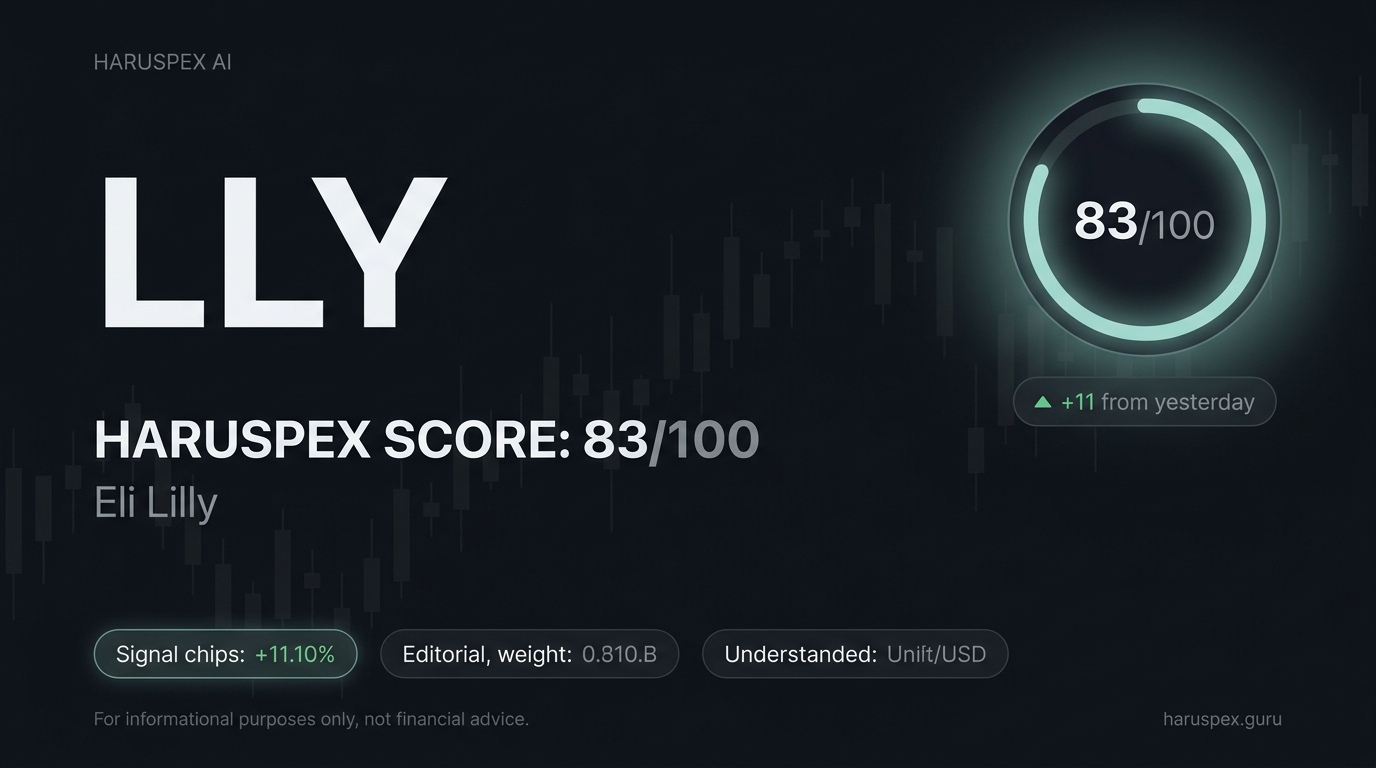
The earnings dimension, with a score of 63.9 and a slight increase of 0.1 points, reflects continued positive post-earnings sentiment. This indicates that companies like MU, LLY, and NEM are likely exceeding expectations or providing strong forward guidance, contributing to their bullish market pressure.
Risk Factors and Contrarian Signals
While the overall AI signal points to bullish pressure, several dimensions present cautionary notes. The most significant concern comes from the insider_trading dimension, which registers a low score of 33.9. This bearish pressure suggests company insiders are actively selling shares in names like TSLA, LLY, and AMZN, often a contrarian indicator against bullish market pressure.
Furthermore, the concentration_risk dimension, at 45.9, sits in the neutral zone, indicating potential vulnerability in highly concentrated portfolios. Geopolitical dimensions like us_china_official (43.7) and us_china_unofficial (42.9) also exhibit neutral to bearish pressure. These factors represent persistent overhangs that could quickly shift market dynamics, particularly for global players like MSFT and BRK.B.
What Would Change This View
The current bullish pressure thesis, while robust, is not without its triggers for invalidation. A significant shift would occur if the market-wide average AI score drops below 55 for two consecutive trading sessions. Another indicator would be if the VIX were to close above 20 and remain there for a full trading week, signaling elevated fear.
Finally, a sustained breach of the 4.75% threshold by the 10-Year Treasury Yield, coupled with a decline in the institutional dimension score below 60, would suggest a fundamental re-evaluation is necessary. These conditions would imply a more significant macro shift impacting market stability.
Outlook
Despite the S&P 500's recent dip, Haruspex AI analysis suggests that a strong bullish undercurrent remains prevalent across the market. Key dimensions like institutional support, short-interest dynamics, and improving supply chains continue to provide a positive directional edge for a majority of stocks. Investors should monitor these strong signals for opportunities.
However, the cautionary signals from insider selling and persistent geopolitical risks cannot be ignored. While broad market indices might see continued volatility, selective stock picking based on these AI-driven dimension insights could prove beneficial. Focus on companies exhibiting strong positive scores in multiple dimensions while being mindful of insider sentiment.


